BBM · Identity & onboarding
BBID.
BBM had about 120 million monthly active users and four competing ways to sign up. I led a 12-person team that rebuilt identity and onboarding around one phone number and one device, and proved it with research on production code before it rolled out.
Role
Department head and lead designer
Team
12: designers, research, product, architecture, data and engineering
Timeline
3 months, 8 iterations
Platforms
iOS and Android
Results over the following two quarters
−67%
Sign-up churn
−84%
Sign-in churn
+14%
New sign-ups
(01) The problem
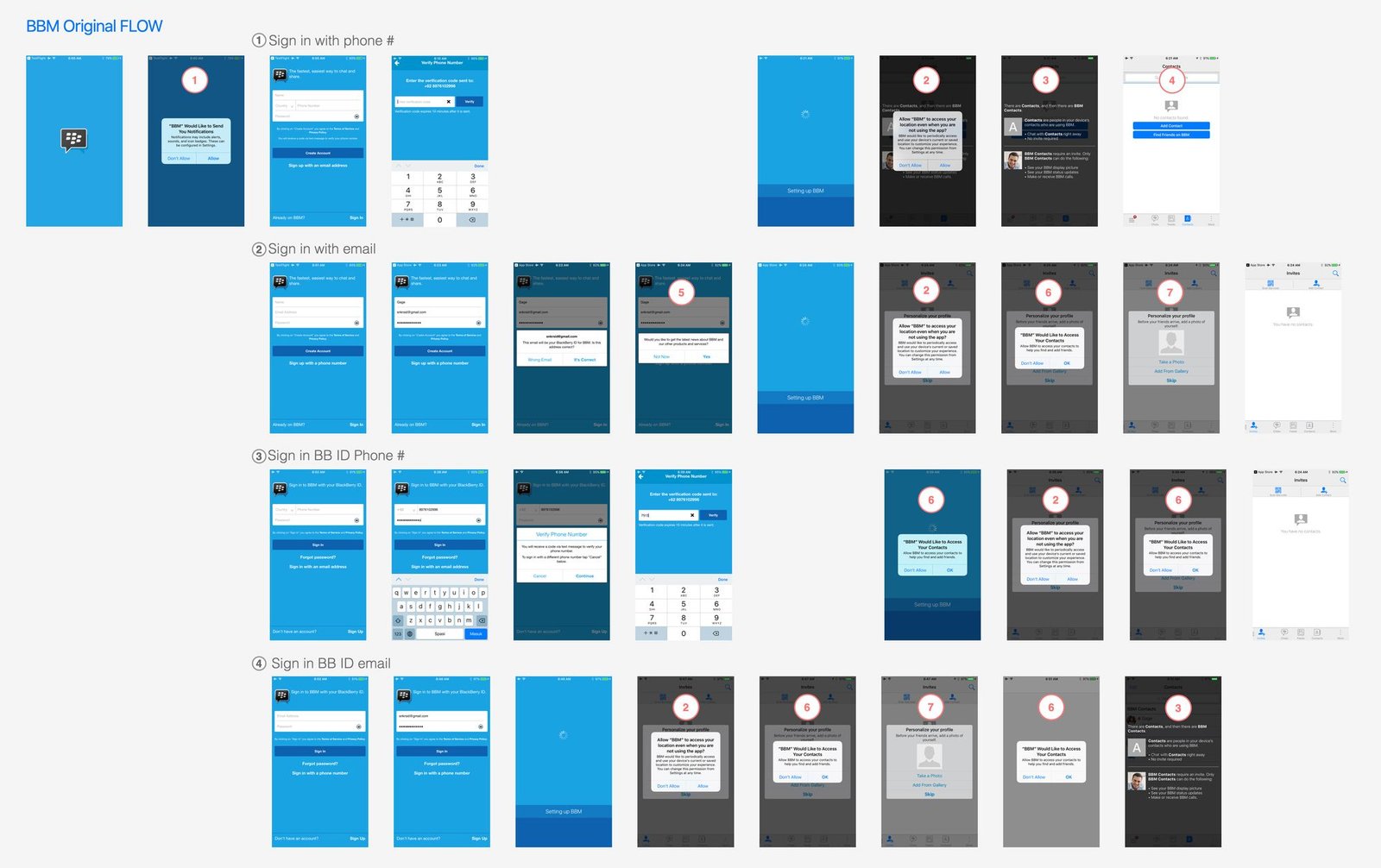
A huge base and a fragmented front door
Disconnected
Phone, email, UPIN and Enterprise ID: four ways to identify, all competing for the same entry point.
Foreign on every phone
The look and feel matched neither iOS nor Android.
Built for security first
Onboarding opened with a permission request and kept asking, seven times in all.
Local context
Habits, norms and the DANA wallet on the roadmap all shaped what identity had to do.
(02) How we worked
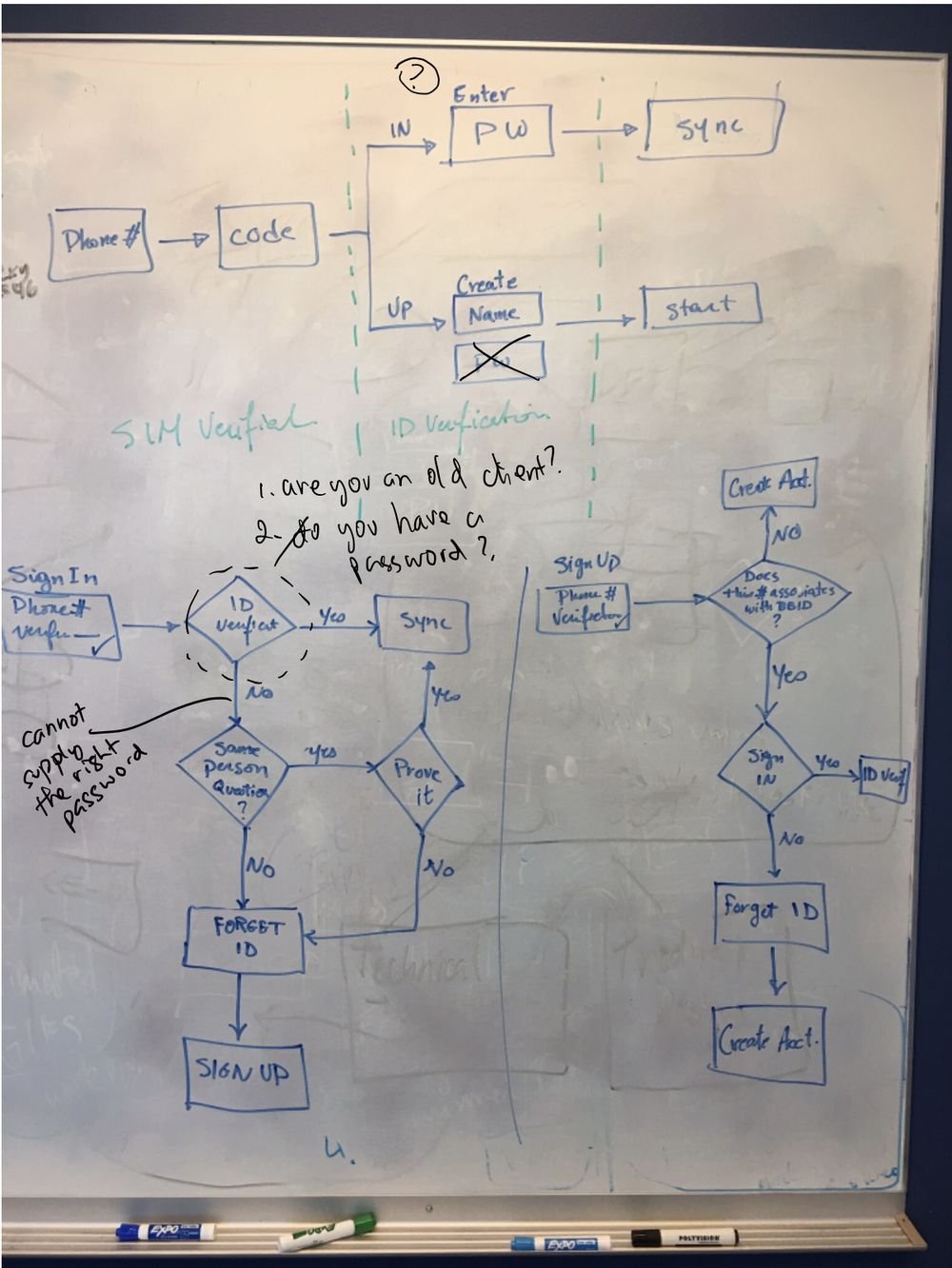
Hypothesis first, then research on production
Framing
- What does the data tell us, and what are the business goals?
- Write the hypothesis first, then test it
- Follow iOS and Android guidelines, and build a new BBM design system to match
Research
- Competitive analysis and 2 UX focus groups
- 2 rounds of usability studies on production code
- 2 rounds of sanity research with Firebase feature flags on 50% of the live app
(03) Findings and decisions
What the data told us, and what we did about it
What we found
What we decided
About 40% of drop-offs happened on permission screens.
Streamline the flow.
Only 20% signed in with email, and 0.3% with UPIN.
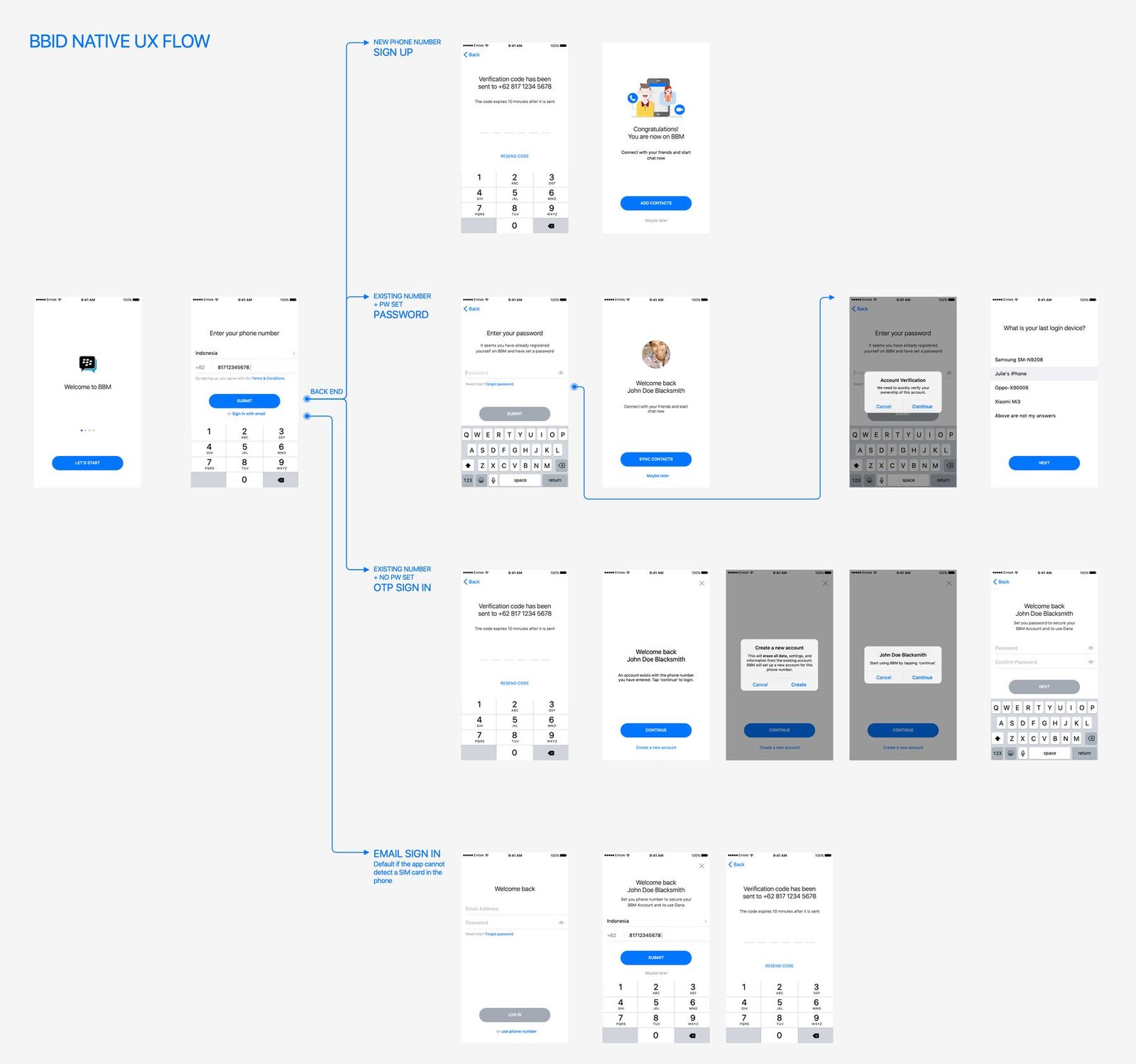
Lead with the phone number. Keep email as the fallback when no SIM card is detected.
33% of users were over 60. 62% used Android, 38% iOS.
A familiar, simple UI with fewer elements that feels native on both platforms.
People change numbers, carry two phones, and carriers recycle numbers.
One phone number and one device are the source of identity, with a check for recycled numbers.
(04) The solution
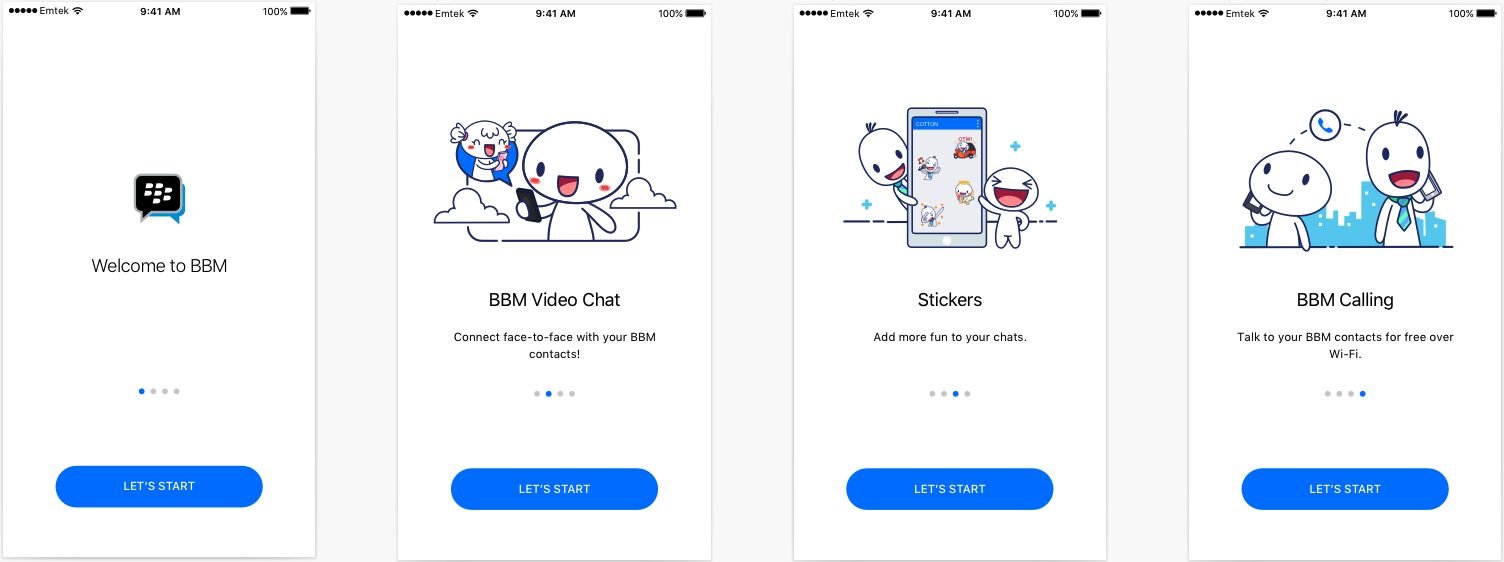
Clear, smart and native on both platforms
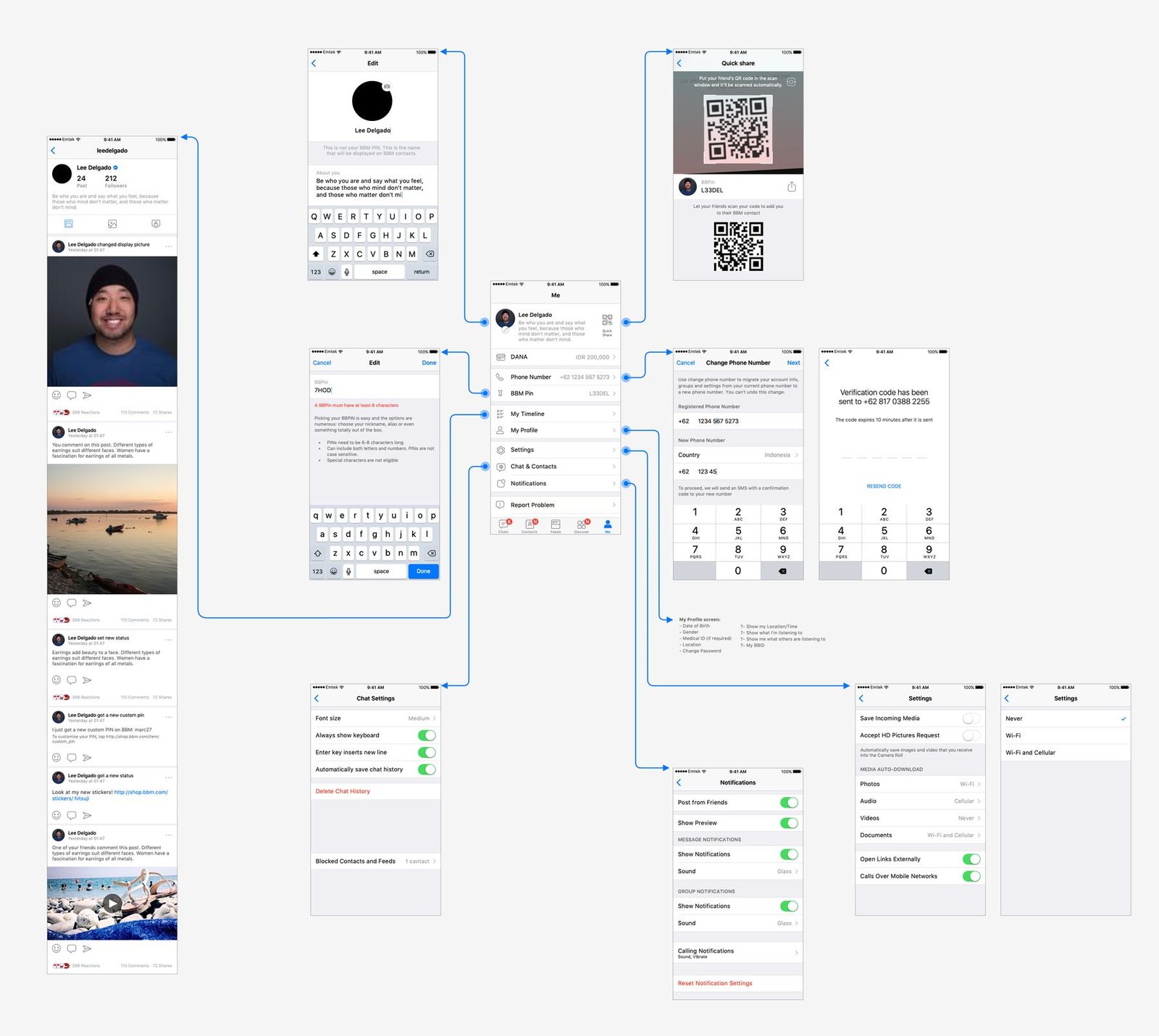
(05) Results
Two quarters after launch
−67%
Sign-up churn
−84%
Sign-in churn
+14%
New sign-ups
35%
Password adoption by end of Q2
8%
2FA adoption by end of Q2
Time in app showed no direct link to this project, and no negative effect over the two quarters.
(06) What I took from it
Three lessons I still use
Fix the front door first
Streamlining sign-up and sign-in moved churn far more than anything else we tried.
Plan for adoption after launch
Password and 2FA ramped slowly. Security features need their own nudges.
Get the foundation right
With identity fixed, DANA’s regulations and security measures were easy to build into the app.
Next case study
Project MOPP
A mortgage pre-approval redesign judged on three business OKRs, and the pivot when one of them didn’t move.
Do you like what you see?
Let’s talk.
Clear direction, trusted leadership, and design that moves the business forward.